How long should you actually expect your charger to last
The short answer is a lot longer than most people think. A Level 2 home EV charger from a quality brand, installed correctly with a proper permit, typically lasts 10 to 15 years without any significant trouble. Units that stay indoors in a garage and get decent care can reach 15 to 20 years easily.
To put that in perspective, a home EV charger installed this year will likely still be working when you buy your second or third electric vehicle. Think of it less like a phone upgrade cycle and more like a washer or dryer. You buy a good one, have it installed properly, and then just use it.
The caveat is brand quality. Budget chargers from unfamiliar brands, the kind that show up as white-labeled products with no clear company behind them, tend to top out at 5 to 8 years. The components are cheaper, the cable insulation is thinner, and the thermal management is less robust. You save $100 to $150 upfront and often spend it back in a premature replacement plus a second installation trip.
The brands worth sticking with for long-term reliability in the Pacific Northwest include ChargePoint, Emporia, JuiceBox, Tesla Wall Connector, and Grizzl-E. All of them use commercial-grade internal components. Our home EV charger brands guide goes deeper on what separates them.
The single biggest factor in charger lifespan
It is not the brand. It is the installation.
A well-installed charger runs within its design parameters for the full life of the unit. An improperly installed charger starts degrading from day one. Here is what the difference looks like in practice:
A correct installation uses the right wire gauge for the circuit amperage, a properly sized breaker, weatherproof conduit anywhere the run goes through unconditioned space or exterior walls, solid anti-vibration mounting on an appropriate backing surface, and tight, properly torqued connections at the breaker and at the charger body.
A problematic installation uses undersized wire that heats up under continuous EV charging loads, a loose connection at the breaker that causes arcing over time, conduit that was not sealed where it enters the garage, or the charger mounted directly to drywall with nothing behind it. None of these are obvious the day the charger goes in. All of them shorten the charger's life.
Getting a permit and having the installation inspected is not just a legal formality. It is a check that the circuit meets the code requirements for the charger's continuous electrical load. The inspector catches problems that would otherwise go unnoticed for years. A proper professional installation from a licensed electrician is genuinely the best thing you can do for your charger's long-term reliability.
Choosing the right enclosure rating for where you live
The NEMA enclosure rating stamped on a charger tells you how much environmental protection it has. Getting this wrong is a common cause of premature failure, especially in the Pacific Northwest where rain exposure is more of a factor than temperature.
- NEMA 1: Indoor use only. No moisture protection at all. Fine for a heated, fully enclosed space with no humidity concerns.
- NEMA 3R: Handles rain, sleet, and ice. The minimum you want for any location that could see water, including a covered carport or the exterior of a detached garage with an overhang.
- NEMA 4: Handles direct water spray, windblown rain, and splashing. The right choice for fully outdoor locations without any overhead cover.
- NEMA 4X: Everything NEMA 4 does plus corrosion resistance. Recommended for any location near Puget Sound where salt air is a factor, or in coastal properties on the peninsula and islands.
Most modern home chargers carry a NEMA 3R rating at minimum. If you are mounting outdoors in a fully exposed location, look specifically for NEMA 4 or 4X. Putting a NEMA 1 unit where it gets rained on will shorten its useful life by years. Our EV charger placement guide covers how to pick the right mounting location from the start.
How you handle the cable matters more than you think
The charging cable is consistently the first thing to show wear on a home EV charger. The cable bends at the same two spots with every plug-in and unplug, and after a few thousand cycles, that repeated flexing causes micro-cracks in the insulation where the cable exits the charger body and again near the connector.
Good habits add years to cable life:
- Hang the cable on the built-in holster or a dedicated wall hook every time. Coiling it on a wet garage floor is one of the fastest ways to damage it.
- Never step on it or let vehicles drive over it.
- Hold the connector body when plugging and unplugging, not the cable itself.
- Wipe the connector dry before plugging in if it got wet.
- Release the latch before pulling the connector out of the vehicle. Do not yank it.
These habits take about two extra seconds per session and meaningfully extend the cable's service life.
Surge protection and power quality
Electrical surges from lightning, utility grid switching, or large appliances cycling on and off inside the home can quietly damage the electronics inside a charger over time. A single large surge can cause immediate failure. Smaller repeated surges degrade components gradually over years in ways that are hard to trace back to their cause.
A whole-home surge protector installed at the main panel is a relatively inexpensive way to protect all your home electronics, including the EV charger, at once. The Pacific Northwest's grid is stable compared to many regions, but summer lightning and occasional utility switching events do happen. Alongside any major home electronics installation, surge protection is a reasonable call.
Heat and where you mount the unit
Electronics age faster when they run hot. A charger mounted on a south-facing exterior wall in direct afternoon sun will accumulate far more thermal stress over a decade than the same charger in a shaded attached garage. If you have the choice between two equally convenient mounting locations, the cooler, shadier one will serve you longer.
This is less of a concern for most Seattle-area installations since attached garages tend to stay moderate in temperature year-round. It is more relevant for homes with south or west-facing exterior walls in sunnier parts of the region.
A realistic maintenance routine
EV chargers need very little maintenance, but a few quick checks once or twice a year can catch issues before they turn into failures. Here is a practical routine that takes about ten minutes:
- Cable inspection (every three months): Run your hand along the full length of the cable and look at it closely from the charger body to the connector tip. Any cracked, kinked, or worn insulation warrants a closer look before you keep using the charger. Pay particular attention to the first foot of cable at each end.
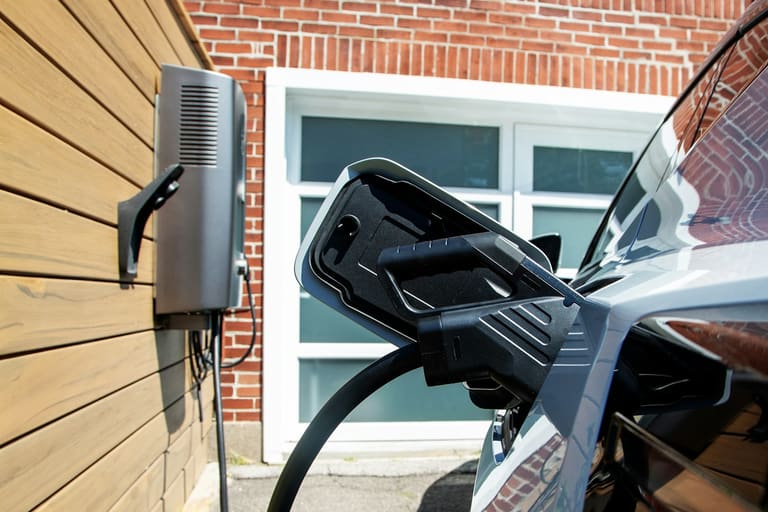
- Connector check (every three months): Look at the J1772 connector pins for corrosion, bending, or debris buildup. Wipe the contact area with a dry cloth if needed. Skip the water and skip compressed air directly into the connector.
- Mounting security check (annually): Give the charger a firm push from multiple directions to confirm it is solidly attached. Any movement or creaking from the mounting hardware means it is time to tighten or re-anchor.
- GFCI test (annually): Press the test button on your GFCI breaker or on the charger itself if it has one. The circuit should trip immediately. If it does not, the GFCI protection has failed and needs replacement before the charger is used again.
- Panel connection check (every three to five years): Ask a licensed electrician to check the torque on the breaker terminal screws during any other panel work. Connections loosen slightly over years of thermal expansion and contraction from charging cycles.
- Outdoor seal inspection (annually if mounted outdoors): Check the conduit entry seals and any gaskets around the enclosure for cracking, shrinkage, or gaps. Even small openings let moisture in over a wet Pacific Northwest winter.
Warranty coverage across the major brands
Warranty length is a reasonable proxy for manufacturer confidence in their product. Here is how the main brands stack up in 2026:
- ChargePoint Home Flex: 3-year limited warranty on defects in materials and workmanship.
- Emporia EV Charger: 3-year limited warranty.
- Tesla Wall Connector Gen 3: 4-year limited warranty, which is the longest standard coverage among major home charger brands.
- JuiceBox 48: 3-year limited warranty.
- Grizzl-E Classic and Smart: 3-year limited warranty.
- Wallbox Pulsar Plus: 3-year limited warranty.
Third-party home warranty programs and extended manufacturer warranties are available for some of these brands. If the charger will be in an exposed outdoor location and you plan to stay in the house long-term, extended coverage can be worth looking into.
One thing that trips people up: most manufacturer warranties specifically require that the charger was installed by a licensed electrician and that a permit was pulled. An unpermitted installation can void the warranty entirely. This is another reason that doing it right the first time protects you in more ways than one. See our EV charger buying guide for more on what to evaluate before you purchase.
How to tell when it is time to replace
A healthy charger just works. These are the signs that something has gone wrong:
- Error codes that keep coming back. One error that clears and does not return is usually a temporary glitch. An error that comes back every few sessions or that stops the charger from starting at all means something inside has failed.
- The car is consistently less charged than it should be. If six hours on a 48 amp charger should add 80 miles but the car only gained 30, the charger may be delivering inconsistent current. Test with a different session before concluding it is the charger, but a persistent pattern points there.
- The breaker trips during charging sessions and never did before. This can be a failing charger pulling erratic current, a loose connection at the panel, or a breaker that has worn out. Any of these needs professional diagnosis before you keep using the circuit.
- Any smell of burning plastic or visible scorch marks. Stop using the charger immediately. This is a safety issue, not just a performance issue. Call a licensed electrician before the charger goes back in service.
- Water got inside the enclosure. Even after it dries out, corrosion continues working on the internal components. Replacement is usually the safer call.
- Visible damage to the cable insulation. Cracked or frayed insulation is a shock hazard. Replacement cables are available for some charger models. For others, replacing the full unit is more practical.
Repair or replace: how to decide
The math usually favors replacement sooner than most people expect, because installation costs are the same either way and a new charger comes with a fresh warranty and often better features.
Repair makes more sense when the charger is under 5 years old and still under warranty. Contact the manufacturer first before paying for any repair. Many warranty claims are resolved with a replacement unit shipped directly to you at no cost.
Replacement makes more sense when the charger is 8 or more years old, out of warranty, and showing failure symptoms. The existing circuit, conduit, and panel work stays in place. A replacement installation typically takes two to three hours and costs less than the original because all the infrastructure is already there. A current-generation charger will also offer better features than whatever was installed a decade ago.
If you are in Seattle, Kirkland, or anywhere across the Puget Sound area and have questions about your current charger or want to plan a new installation, reach out for a free assessment. We can usually tell you over the phone whether what you are seeing is a minor issue or a reason to replace.
Buy from a reputable brand, have it installed correctly by a licensed electrician with a permit, give the cable a quick look every few months, and your EV charger will very likely outlast your current vehicle and the one after it.